










ITALIANS STORE THE APPLES THEY HARVEST IN A MINE
Italians Store Apples in a Mine: Why They Bring Their Harvest Underground
The harvest is transported from the processing plant to the mine not by truck, but by cable car.
In Italy’s Val di Non, local apple growers store part of their harvest in a former dolomite mine. Cold storage chambers built inside the mountain require significantly less energy than traditional surface storage facilities. Furthermore, the apples are transported from the processing plant to the mine via a specially constructed cable car rather than by truck, according to Gospodarski list .In the province of Trento, in the Val di Non and Val di Sole valleys, apple cultivation is one of the leading agricultural sectors. The region’s producers are united by the Melinda consortium, which comprises 16 cooperatives. They organize the marketing and processing of the harvest from thousands of family farms.
Farmers grow apples in their own orchards, and after harvest, the fruit is distributed to the general system. Cooperatives are responsible for receiving, sorting, storing, and packaging them. This allows even small orchard owners to access technologies that would otherwise be uneconomical to invest in.
At processing plants, apples are sorted by size, color, and quality. Modern lines use cameras to inspect the fruit, after which they are sent to the appropriate areas for sorting and packaging.Some of the harvest is sold shortly after harvest, while the rest is stored for longer. This requires large-capacity cold storage facilities with adjustable storage conditions.
Dolomite Mountain as a Natural Thermoregulator
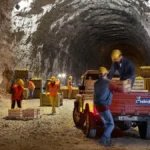
The Melinda consortium installed underground refrigeration chambers in the former Rio Maggiore dolomite mine, located approximately 300 meters below ground.The main advantage of this solution is the ability of rock to stabilize temperature. Temperature fluctuations underground are less than in buildings above ground, so refrigeration equipment operates at a lower load.
However, natural coolness alone isn’t enough to preserve the harvest. The chambers use artificial cooling and regulate the air composition. According to the system’s technical description, apples are stored at a temperature of approximately 1°C and an oxygen concentration of approximately 1%.Low temperatures and reduced oxygen levels slow down metabolic processes in apples and their ripening. This allows for longer shelf life for apples intended for sale.
According to Melinda, underground storage requires approximately 30% less energy than traditional surface cold storage facilities. Furthermore, it eliminated the need to build new above-ground warehouses of similar capacity.
The cable car transports almost 150 tons of apples per hour.
To deliver the harvest to underground storage facilities, it must be constantly transported from the processing plant to the mine. Previously, trucks were used for this purpose.In August 2025, the Funivia delle Mele system, or “apple cableway,” was launched. The approximately 1.3-kilometer-long line connects the processing plant in Predai with the Rio Maggiore mine. Each of the 28 cargo cabins can carry three large containers of fruit.
The system is capable of transporting 460 containers weighing 300 kg per hour. This equates to approximately 138 tons of apples. Official project descriptions round the capacity to 150 tons per hour.According to the Italian government, the cable car will replace approximately 5,000 truck trips annually, reducing congestion on local roads and emissions associated with freight transport.