

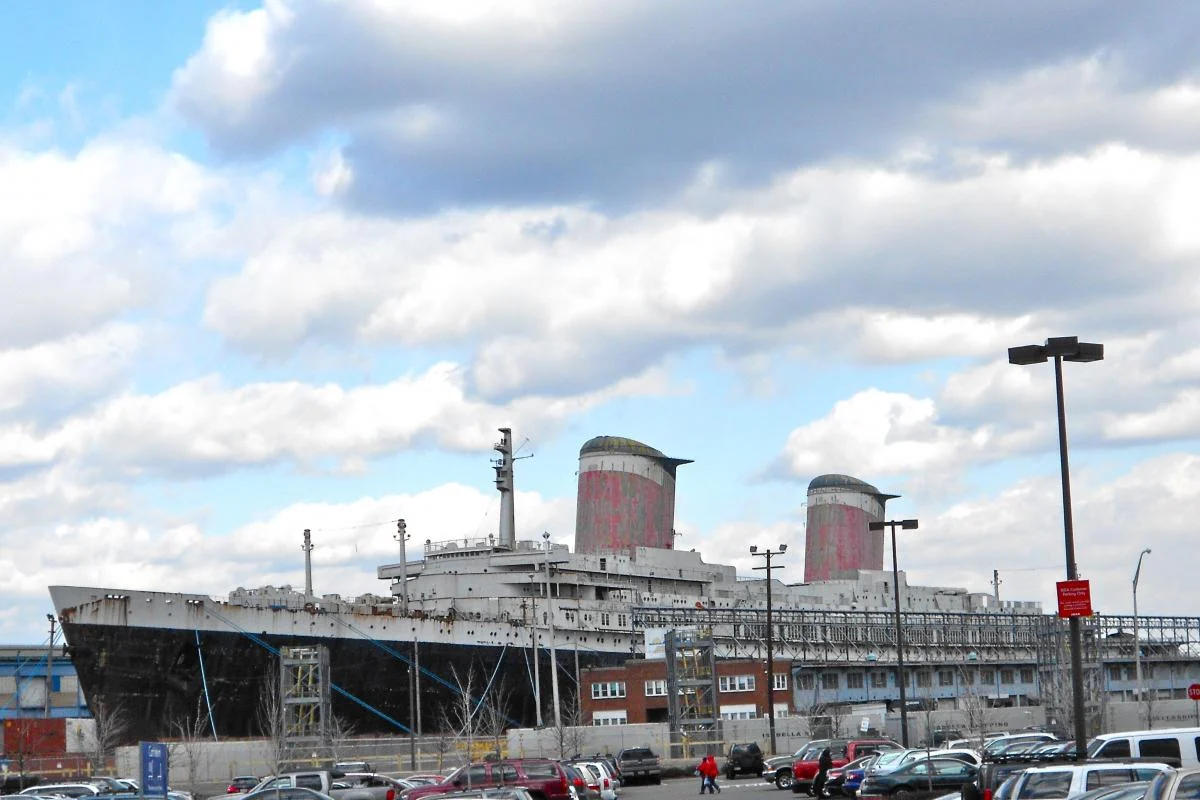
A SHIP LONGER THAN THE TITANIC WILL BE SINKED OFF THE FLORIDA COAST
A legendary liner longer than the Titanic will be sunk off the coast of Florida: why is this necessary?
Local authorities insist that turning the liner into an artificial reef is the only realistic alternative to scrapping it.
The legendary ocean liner SS United States, which once carried world leaders, Hollywood stars, and thousands of emigrants across the Atlantic Ocean , is being prepared for its final voyage – to the bottom of the Gulf of Mexico. There, it will become the world’s largest artificial reef, reports The Independent .The selected location is approximately 41 kilometers southwest of Destin and 59 kilometers southeast of Pensacola. The exact timing of the operation is subject to change depending on weather and sea conditions.
“This is an important step toward creating a unique facility that will be important both for the environment and for our tourism industry,” county officials said.
The SS United States is nearly 305 meters long—more than 30 meters longer than the Titanic. The liner was a remarkable achievement of mid-20th-century engineering. It was also designed to be used for troop transport if necessary.During its maiden voyage in 1952, the SS United States set the Atlantic crossing speed record. The liner averaged over 40 mph (66 km/h), or 36 knots, and completed the journey in three days, 10 hours, and 40 minutes. It beat the previous record holder, the RMS Queen Mary, by 10 hours.
The SS United States still holds the record for the fastest passenger ship to cross the Atlantic Ocean.
For nearly three decades, the liner lay moored off the banks of the Delaware River in Philadelphia. Throughout this time, historic preservationists sought ways to restore the vessel. However, ambitious restoration projects were repeatedly thwarted by the prohibitive cost.
A long-running legal dispute between the non-profit organization that managed the liner and the owner of the pier over berthing fees and rent eventually ended with a court ruling that the pier must be vacated.In March, the ship was towed for 12 days to the port of Mobile, Alabama. There, workers spent several months preparing it for sinking: removing electrical wiring, glass, and plastic, and removing hazardous chemicals.
The New York Coalition, an environmental organization, has spoken out against the sinking, filing a lawsuit in federal court in Pensacola, seeking to halt the operation on historic preservation grounds. Meanwhile, local authorities insist that turning the ship into an artificial reef is the only realistic alternative to scrapping it.
“The SS United States has inspired millions of people around the world as a symbol of American pride and excellence,” said Susan Gibbs, president of the SS United States Conservancy, a nonprofit that preserves the ship.
She added that turning the liner into an artificial reef will make it a unique historical landmark both above and below the water.
The project calls for Okaloosa County to spend a total of $10.1 million on acquiring the vessel, transporting it, cleaning it, and sinking it. An additional $1 million of this amount will be used to create a waterfront museum dedicated to the liner’s history.A collaboration of local organizations helped secure funding for the project. Pensacola’s tourism industry contributed $1.5 million, and the Coastal Conservation Association of Florida contributed another $500,000. For the Coastal Conservation Association of Florida, this is the largest single donation in its 40 years of existence.
“This partnership will provide visitors with incredible adventure opportunities for generations to come and will boost the tourism economy, benefiting the state and the entire Northwest Florida region,” said Okaloosa County Council Chairman Paul Mixon.
After its sinking, the SS United States will become part of a network of more than 500 artificial reefs in Okaloosa County, including about a dozen smaller shipwrecks.
The liner will lie on the seabed at a depth of approximately 55 meters, with its upper decks approximately 18 meters below the surface. This will make the site accessible to both novice and experienced divers. The aircraft carrier USS Oriskany, which was sunk in 2006 to create a diving site, lies 22 kilometers away.
“Having the SS United States on our coast is a legacy we’ll pass on to future generations,” said Okaloosa County Commissioner Mel Ponder. He added that the project will be significant not only for divers and fishermen but also for the entire local community.Local businesses, including dive shops, fishing charter companies, and hotels, expect the new maritime attraction to generate millions of dollars in annual tourism revenue. At the same time, the wreck will become a new habitat for marine life.
“The transformation of the SS United States into the largest artificial reef in the world provides a rare opportunity to elevate our entire region to international prominence,” said Visit Pensacola President and CEO Darien Schaefer.
Coastal Conservation Association Florida Executive Director Brian Gorski called the project a unique opportunity to participate in the creation of the largest artificial reef in the world.


