

THEY BUILT HOUSES IN ITALY THAT CAN BE DISASSEMBLED IN ONE NIGHT
In Italy, they built houses that could be dismantled overnight: why did they do this?
These buildings can still be admired today.
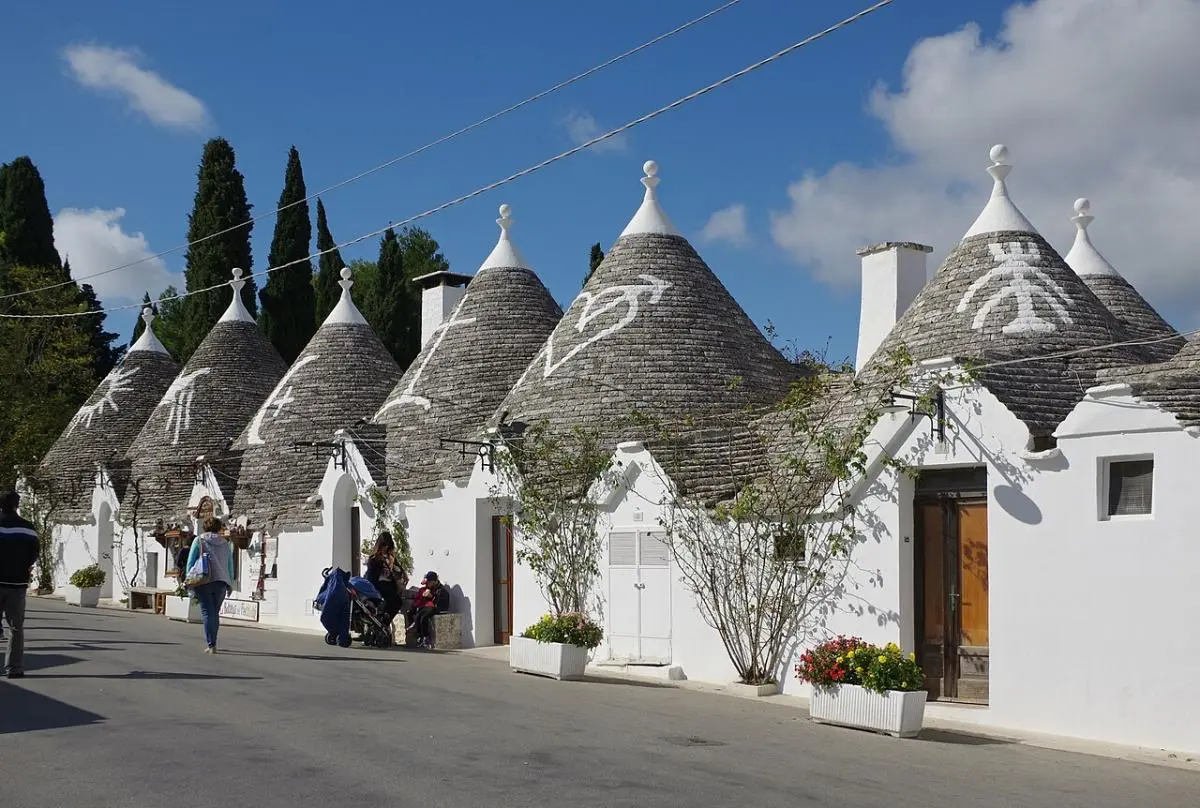
In the southern Italian region of Apulia, you can see unusual white houses with conical roofs. The city of Alberobello has the largest number of such buildings , with around 1,500 trulli. Although they resemble fairytale houses, their unusual design had a very practical explanation, writes gazeta.pl .The distinctive white houses were initially built round, later square. Their main feature was their cone-shaped roofs, covered with limestone slabs on the outside. These served as roof tiles and protected the houses from the rain. Each roof was crowned with a decorative element of a specific shape and symbolic meaning, each house being unique.
Inside, the houses were usually divided into two parts. The main room with a mezzanine was in the center, while small niches were arranged on the sides for various purposes, particularly sleeping and cooking.
Only limestone, which was abundant in the area, was used in construction. Interestingly, the stones were laid dry, without mortar.Although this method was known long before the appearance of the trulli, it had a special significance in Alberobello. According to legend, it was a way for local residents to evade taxes.
A clever way to avoid paying taxes
The first trulli in Alberobello appeared as early as the 15th century. However, a royal decree prohibited feudal lords from establishing settlements. Therefore, the houses were built so that they could be quickly demolished if necessary. When a royal inspection approached, the dwellings were dismantled in minutes. All that remained were scattered limestone stones.
During the inspection, inspectors saw uninhabited land that could still be used for hunting. This allowed local residents to avoid paying taxes. As soon as the inspectors left the area, people began rebuilding their homes.According to legend, this is exactly what happened in 1644. In one night, all the buildings were dismantled, the stones scattered across the surrounding fields, and the inhabitants were temporarily expelled. Once the inspection was complete, the settlers returned and rebuilt the trulli using dry stone masonry.
This technology was used until 1797, when Alberobello was granted the status of a royal city. After that, builders began using mortar. The first new building in the area was Casa d’Amore, which still symbolizes this change today.
In 1930, the cone-shaped houses were declared a national monument and placed under protection, and in 1996 they were added to the UNESCO World Heritage List. Today, most trulli serve as tourist accommodation, souvenir shops, or restaurants.


