
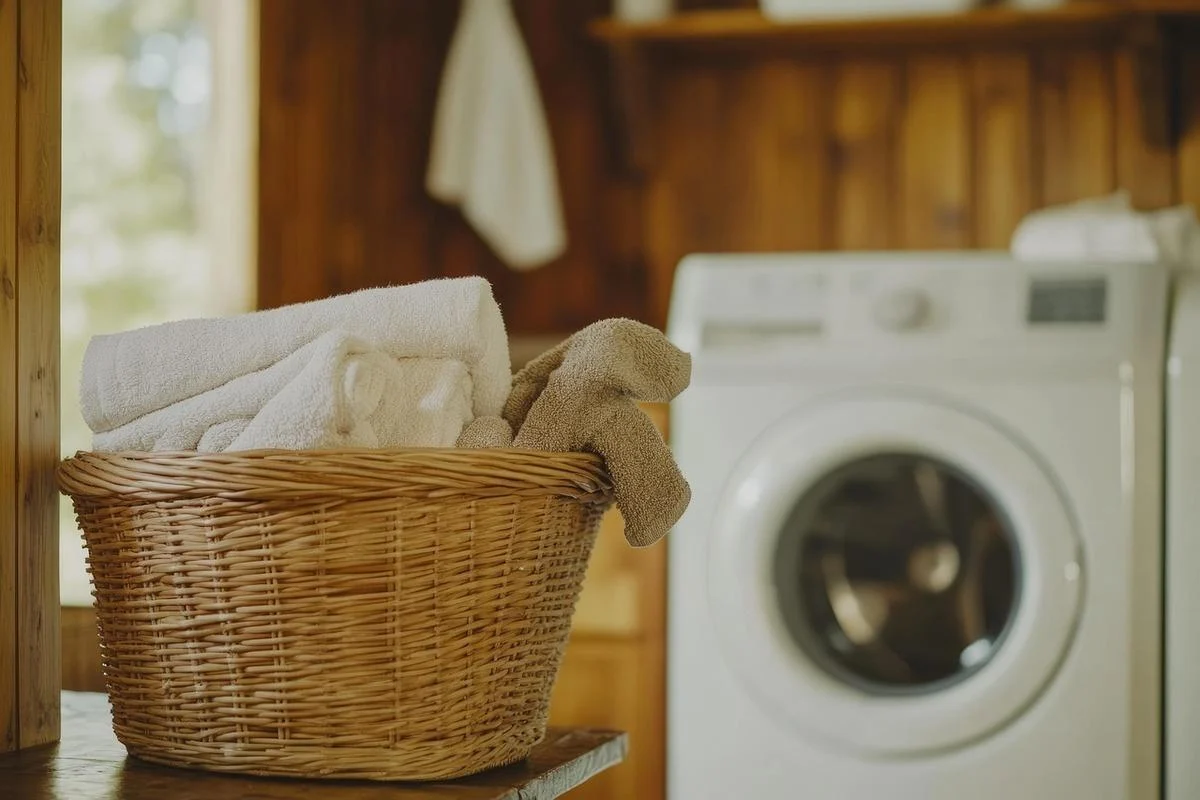
Why Towels Become Hard After Washing and how to fix it
-
latesvideo
- Latest Listings
- 5

Why Towels Become Hard After Washing and how to fix it
Why towels become stiff after washing and how to fix it: useful tips
Before washing towels, the publication advises checking two things.
Towels are most often made from cotton terry cloth. Its characteristic loops increase the absorbent surface area but also trap detergent residue, mineral deposits, and dirt, writes Dziennik Gazeta Prawna .The publication explains that if the fibers aren’t washed properly or dry clumped and stiff, the material may feel stiff. However, this doesn’t mean the towel is damaged.
The article adds that water quality is also important. In particular, hard water contains higher levels of calcium and magnesium ions, which can hinder the action of detergents and promote scale formation.
“Therefore, identical towels may behave differently in two homes, despite being washed at the same temperature,” the publication notes.The most common mistake made
The publication reported that fabric softener leaves fabrics smooth and fragrant, but it also leaves chemicals in the fibers. For example, too much chemicals can cause towels to lose their absorbency and, over time, cause them to feel sticky and stiff.
Therefore, some textile manufacturers advise limiting the use of such products or avoiding them altogether.
It’s worth noting that the same situation can arise from using too much detergent or gel. That is, using a larger amount of detergent doesn’t necessarily mean better soil removal from fabric.
“The most sensible thing to start with is the amount indicated on the detergent packaging, taking into account the degree of soiling, the size of the load, and the hardness of the water,” the article says.It is added that if towels are used only after bathing and do not have visible stains, they usually do not require the maximum dose.
Before washing, the publication recommends checking two things. First, the label.
“Don’t assume that every cotton towel can be safely washed at 60°C. Colored trim, embroidery, and other fiber blends may require more gentle washing,” the article notes.
Therefore, please pay attention to the recommended temperature, tumble dryability and possible bleach restrictions, which vary by product.
The second consideration is load size. Towels absorb a lot of water and become heavy after soaking.
The publication explained that when the drum is overcrowded, the items have less room to move, and the rinse cycle may be less effective. Therefore, it’s best to allow for space according to the washing machine’s instructions and avoid forcing the last item in.
What to do if your towels have already become stiffThe publication recommends starting with a normal wash cycle using the correct amount of laundry detergent, without adding fabric softener.
“If you suspect that detergent residue has accumulated in the fabric, an extra rinse may help, provided that your washing machine has such a program,” the article adds.
Once the cycle is complete, remove the towels as quickly as possible and shake them vigorously. This simple movement helps fluff up the loops before drying.
The article notes that fabrics should be hung loosely to allow air to circulate on both sides. Folding towels in multiple layers will cause them to dry longer and less evenly.
If the label says tumble dry, the appropriate program can improve fluffiness by moving and aerating the fibers. However, be sure to follow the recommended temperature and avoid overdrying the fabric.
Should I add baking soda and vinegar?
Adding vinegar to your washing machine is a popular suggestion on social media. The publication explained that the acidic solution can react with certain mineral deposits, but regular use of such additives isn’t a universal method for cleaning your appliance or fabrics.“Some washing machine manufacturers do not recommend adding vinegar due to the potential impact it may have on the appliance’s components. Before using any additive, consult the instructions for your specific model,” the publication advises.
It is noted that mixing vinegar and baking soda in the same container causes foaming, but largely results in the mutual neutralization of both substances. The article emphasizes that this does not prove exceptional cleaning effectiveness.
The publication also warned against mixing vinegar with chlorine bleach, as this could release a dangerous gas.

Leave a Reply
You must be logged in to post a comment.